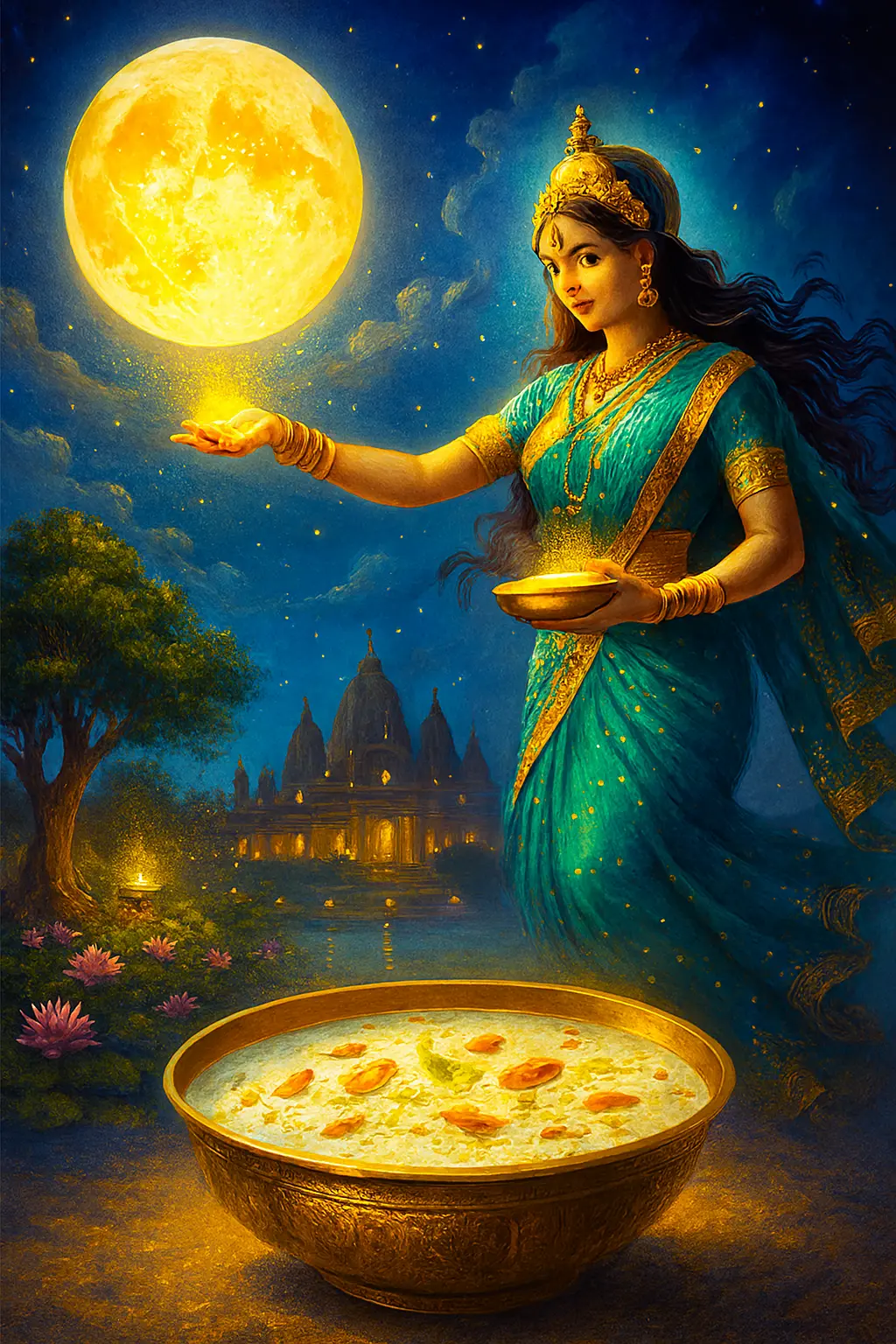
Celebrate Sharad Purnima 2025 on October 6—moonlit rituals, kheer, crystal charging, and divine energy unite tradition, Ayurveda, and spiritual awakening.
“Sharad Purnima is the full moon night in Ashwin month when the moon is believed to shower nectar on Earth.”
Sharad Purnima 2025: The Night When Moonlight Becomes Nectar
Bowl of kheer kept under moonlight for Sharad Purnima ritual
There are certain nights in the Indian calendar when the sky itself seems to descend upon the earth, draping the world in silver. Sharad Purnima is one such night. Often hailed as the brightest full moon of the year, it falls in the Ashwin month according to the Hindu lunar calendar, which in 2025 corresponds to 6 October.
From ancient times, it has been described as the night when the moon does not merely shine but blesses. The scriptures claim that the rays of the moon on Sharad Purnima drip nectar, carrying healing powers and balancing energy. In many households, bowls of kheer are placed under the open sky, left to absorb this celestial ambrosia before being consumed the next morning. It is a tradition as charming as it is profound, reminding us that food is not only nourishment but also a medium of devotion.
Spiritual Significance
For the spiritual seeker, this night is an invitation. The boundaries between seen and unseen grow thin, and tools of inner growth such as crystals, rosary malas and tarot decks are believed to absorb the lunar vibrations. It is a night for meditation, for cleansing, for whispering one’s intentions into the cosmos.
Picture a family terrace on this special night. An elder, wrapped in a shawl, tells the younger generation the stories of Krishna dancing with the gopis under this very moon. The younger ones listen with wide eyes, while the bowls of kheer cool in the breeze. Such is the magic of Sharad Purnima, where memory, myth and ritual converge.
In the spiritual calendar every year has its night, and Sharad Purnima is the crowning jewel of those nights.
Scriptural Roots of Sharad Purnima
The roots of this festival reach deep into India’s sacred texts. The Brahma Purana describes Sharad Purnima as the night when the moon showers its nectar on the earth, purifying sins and granting prosperity. The Skanda Purana states that Goddess Lakshmi roams the earth at this time, seeking out homes where people remain awake in prayer and blessing them with abundance.
The Bhagavata Purana recounts the legendary Maharasa of Krishna with the gopis, which took place on this very night. It was not simply a dance but an expression of divine love where every soul experienced union with the eternal. No wonder Sharad Purnima is also called the night of love fulfilled.
The Atharva Veda offers a more philosophical insight. It says Chandramā manaso jātaḥ, the moon was born of the cosmic mind. To meditate on the moon during this night is therefore to bring balance to one’s own restless thoughts.
Divine Grace and Accessibility
Such scriptural voices combine to portray Sharad Purnima as a night of extraordinary grace, when divinity is said to be unusually accessible.
“Sharad Purnima is the full moon night in Ashwin month when the moon is believed to shower nectar on Earth.”
Regional Celebrations Across India
Sharad Purnima is woven into the fabric of many Indian regions, each with its own flavour.
- West Bengal and Odisha: Celebrated as Kojagari Lakshmi Puja. Homes are cleaned, alpana patterns drawn, and Goddess Lakshmi is worshipped with flowers, incense and lamps. Families stay awake chanting hymns and singing devotional songs until dawn.
- Gujarat and Maharashtra: The focus is on the kheer ritual. Bowls of pudding are placed on terraces, and some even sleep under the moonlight. Garba and folk dances add vibrancy to the night.
- Odisha: Also observed as Kumar Purnima. Young girls pray to the moon for an ideal husband like Lord Kartikeya, with celebrations full of music and joy.
- Uttar Pradesh and Bihar: Centered around Krishna. Rasleela performances in Mathura and Vrindavan reenact the divine dance of love.
- Rajasthan: Flower-decorated swings adorn courtyards, and women gather to sing traditional songs.
Each region stitches its own embroidery on the shared fabric of the night, yet the thread binding them all is the moon in its silver splendour.
The Ritual of Kheer Under the Moon
Perhaps the most iconic ritual of Sharad Purnima is the preparation of kheer—a blend of milk, aromatic rice and sugar, simmered slowly to perfection. Cardamom, saffron or nuts may be added, but the true secret ingredient is moonlight.
The kheer is placed in bowls under the open sky, covered with a sieve, often in silver vessels believed to amplify lunar energy. Through the night, it absorbs moon rays and mingles with the cool dew. At dawn, it is consumed by family members and shared with neighbours.
In Ayurveda, the milk-rice combination is considered sattvic, promoting calmness and purity. When infused with moonlight, it becomes a dish that cools excess heat, aids digestion and restores mental balance—food transformed into medicine by ritual.
Sharad Purnima as a Night of Charging Energy
Spiritual practitioners use Sharad Purnima as a time to recharge their tools.
- Crystals like amethyst, quartz and citrine are placed under the moon to shed stagnant energy and regain vibrancy.
- Rudraksha and tulsi malas are laid on clean cloths to absorb lunar vibrations, enhancing the power of chants the next day.
- Tarot readers place their decks under the full moon, trusting the moonlight to purify the cards and sharpen intuition.
This practice reflects a deeper truth: just as tides are governed by the moon, human energy is subtly attuned to lunar rhythms. Sharad Purnima marks the peak of that cycle, making it an ideal night for cleansing and recharging.
Ayurveda and the Moon Bathed Food
Ayurveda speaks often of soma, the cooling, nourishing essence of the moon. Foods exposed to moonlight are believed to carry this soma, balancing the fiery doshas within the body.
Moon soaked water, especially when left overnight in a silver vessel, is a well-known remedy for acidity, insomnia and anxiety. Likewise, kheer infused with moon rays is thought to promote restful sleep and calm nerves.
It is remarkable how a tradition so ancient aligns with modern insights about circadian rhythms and nocturnal balance.
Scientific Backing for Sharad Purnima Rituals
Though science may not endorse every spiritual claim, it offers intriguing explanations.
- The full moon reflects maximum sunlight, including soft ultraviolet and infrared rays that can influence biological systems. Studies show that full moons can alter melatonin levels and sleep cycles, possibly explaining heightened awareness during such nights.
- Food kept outdoors gathers dew, which carries trace minerals and alters the texture of dishes like kheer. The change in taste devotees note may not be mere imagination but a subtle physical effect.
- The idea of charging objects under the moon might also be seen as psychological reinforcement. Placing crystals or cards under moonlight creates a ritual of intention, strengthening the subconscious link between the tool and the user.
Thus, science does not invalidate Sharad Purnima rituals but instead provides layers of understanding that enrich their meaning.
Puja Guide for Sharad Purnima at Home
For those who wish to observe Sharad Purnima simply, here is a guide:
- Cleanse your home and prepare a small altar with flowers and a lamp.
- Prepare kheer with devotion.
- Place the kheer in bowls under the open sky along with crystals, malas or any spiritual items.
- Offer prayers to Goddess Lakshmi and Lord Vishnu, chanting hymns if possible.
- Meditate under the moonlight, focusing on breath and calmness.
- At dawn, consume the naturally cool kheer and distribute it as prasad.
It is not the complexity of the ritual but the sincerity of the heart that matters most.
Serving in Style
Modern families are giving Sharad Purnima a new aesthetic. Tables are decorated with marigolds, roses and floating candles. Silver bowls of kheer are placed amidst fairy lights. Crystals gleam like stars in the soft glow.
Some households add contemporary touches such as serving moon soaked pudding in glass jars or arranging moon viewing picnics on terraces. The aim is to keep the essence while presenting it in style.
As the saying goes, variety is the spice of life, and even traditional rituals can be plated with creativity.
A Celebration of Light and Balance
Sharad Purnima is more than a festival. It is a celebration of light, love and balance. It unites scripture with science, devotion with daily life, and tradition with modernity. It is the night when the moon teaches us that beauty is not just to be seen but to be absorbed.
Whether you prepare kheer, charge your crystals, or simply sit in silent meditation, you are aligning yourself with the cosmos. The moon does not discriminate. Its light falls equally on all, reminding us of our shared humanity.
On the upcoming Sharad Purnima, do not let it pass unnoticed. Step outside, gaze upward, and let the silver flood your heart. It may not solve every problem, but it will remind you that peace and beauty are always within reach.
Frequently Asked Questions
1. When is Sharad Purnima in 2025?
2. Why is kheer kept under moonlight on Sharad Purnima?
3. Can crystals and malas be charged during Sharad Purnima?
4. Is there a scientific reason behind this ritual?
5. How is Sharad Purnima different across India?
6. What simple rituals can I try this Sharad Purnima?
7. What is the deeper meaning of Sharad Purnima?
About the Author






4 thoughts on “Sharad Purnima 2025: Embrace the Moonlit Magic of Healing, Rituals & Divine Grace”