The Chariot of Fire: A Tale from Kurukshetra
The war was over.
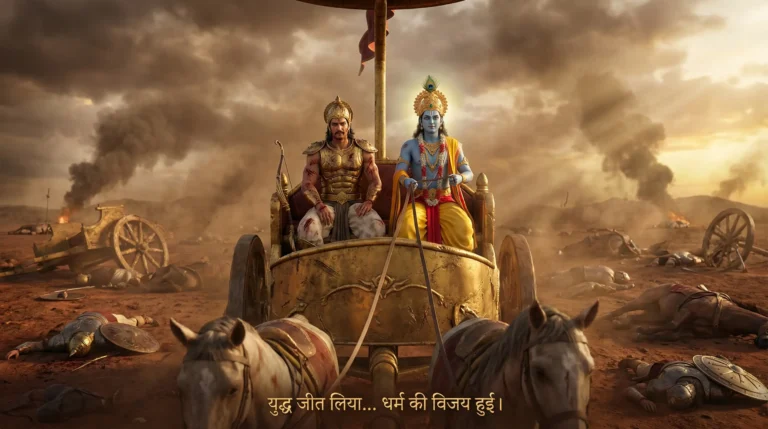
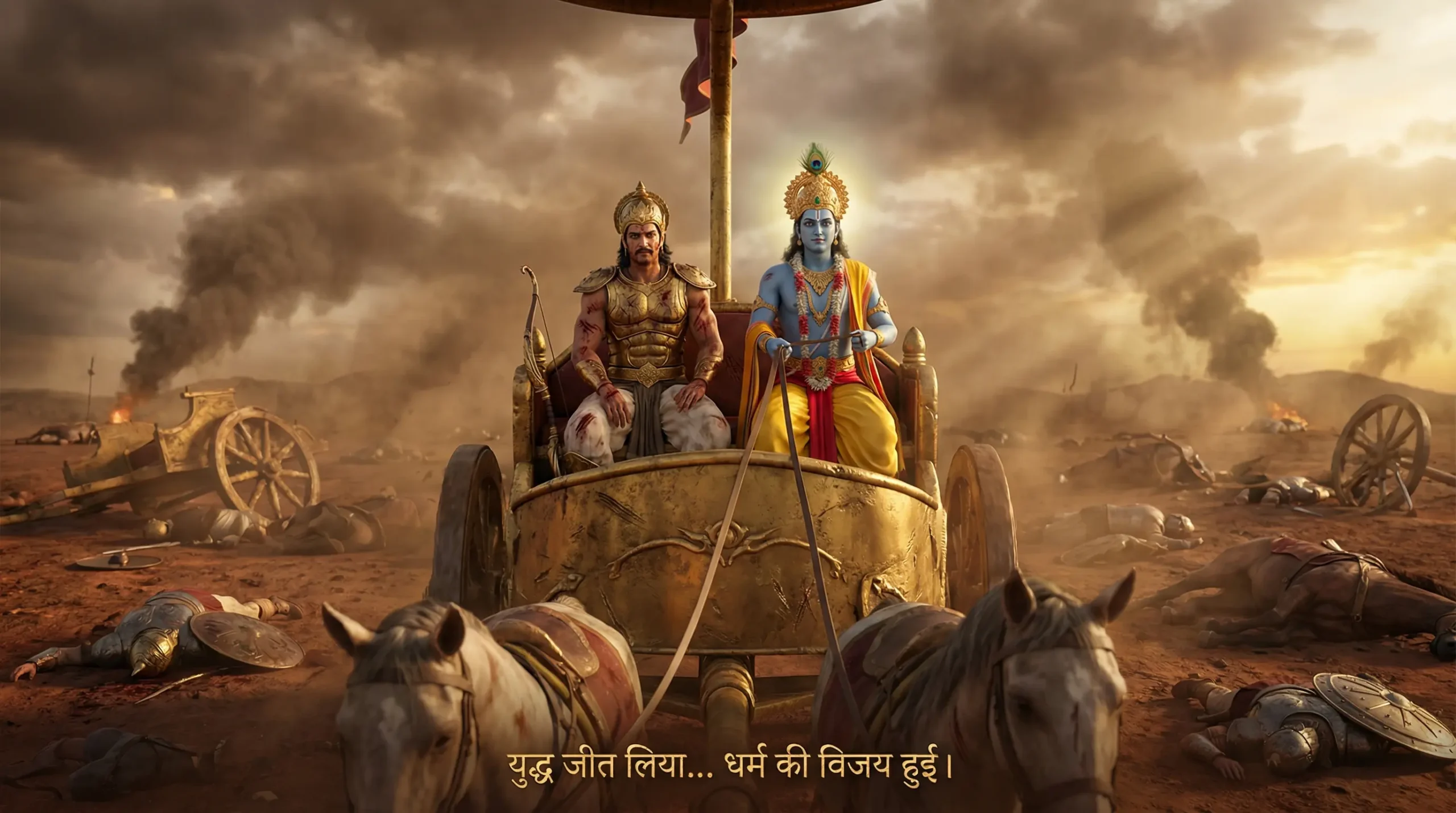
Eighteen days of relentless battle had finally drawn to a close. The great war of the Mahabharata, fought on the sacred soil of Kurukshetra, had consumed kings, shattered dynasties, and drenched the earth in blood. Now, as the sun dipped low on the horizon, its crimson rays mingled with the dust that hung heavy in the air. The battlefield was a graveyard of broken dreams—chariots overturned, banners torn, weapons scattered like fallen leaves after a storm.
Exhausted soldiers limped away, their armor dented, their spirits hollow. Horses whinnied faintly, searching for masters who would never return. The silence that followed was not peace—it was the silence of devastation, of a land that had witnessed too much.
In the midst of this silence, a single chariot rolled slowly across the battlefield. Its golden frame, once resplendent, was now battered and scarred, smeared with the marks of war. Upon it sat two figures whose names would echo through eternity—Arjuna, the greatest archer of his age, and Sri Krishna, the divine charioteer.
Arjuna sat tall, his chest swelling with pride. Victory was theirs. Dharma had triumphed. The Kauravas lay defeated, their arrogance crushed beneath the wheel of destiny. For Arjuna, this was the culmination of his duty, his dharma as a warrior. He had fought valiantly, his arrows raining destruction upon the enemy. He had slain mighty warriors, shattered their formations, and carried the Pandavas to victory. His heart brimmed with satisfaction. The war was over. The burden was lifted.
But then, something unexpected happened.
Krishna, holding the reins with his steady hands, slowed the chariot. The horses snorted, their hooves kicking up dust, and finally came to a halt. Arjuna frowned, puzzled. They had not yet reached the Pandava camp. Why stop now?
“Krishna,” Arjuna said, his voice tinged with impatience, “we are not yet at the camp. Why do you halt the chariot?”
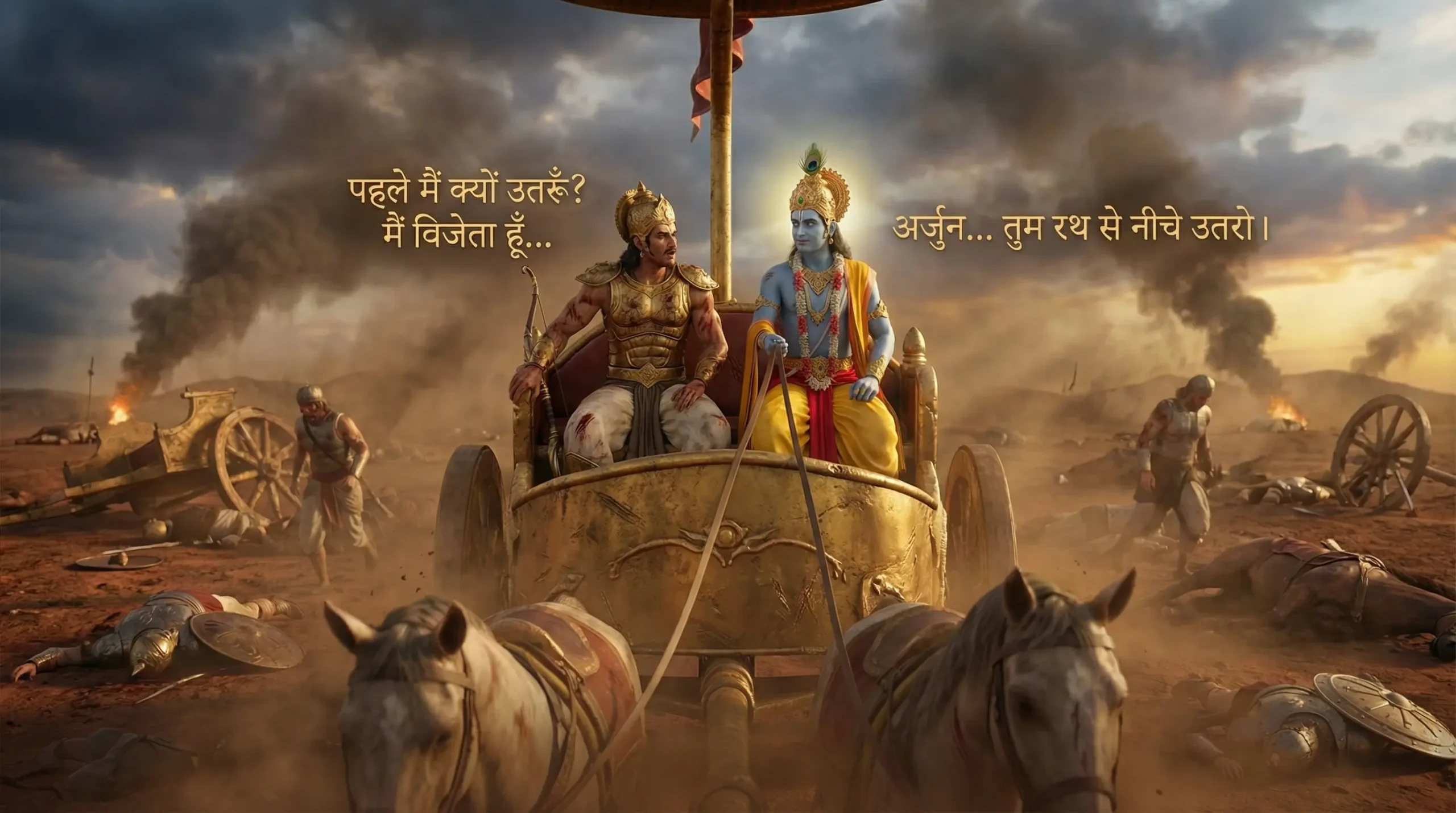
Krishna turned to him, his eyes calm yet firm, carrying a weight that Arjuna could not immediately comprehend. His voice was gentle, but it carried the authority of the cosmos itself.
“Arjuna,” he said, “step down from the chariot.”
Arjuna’s Dilemma
Arjuna blinked. The request felt abrupt, almost disrespectful. Step down? Before Krishna? He was the warrior, the victor, the one who had fought with bow and arrow. Why should he descend first? Pride stirred within him, whispering that this was beneath his dignity.
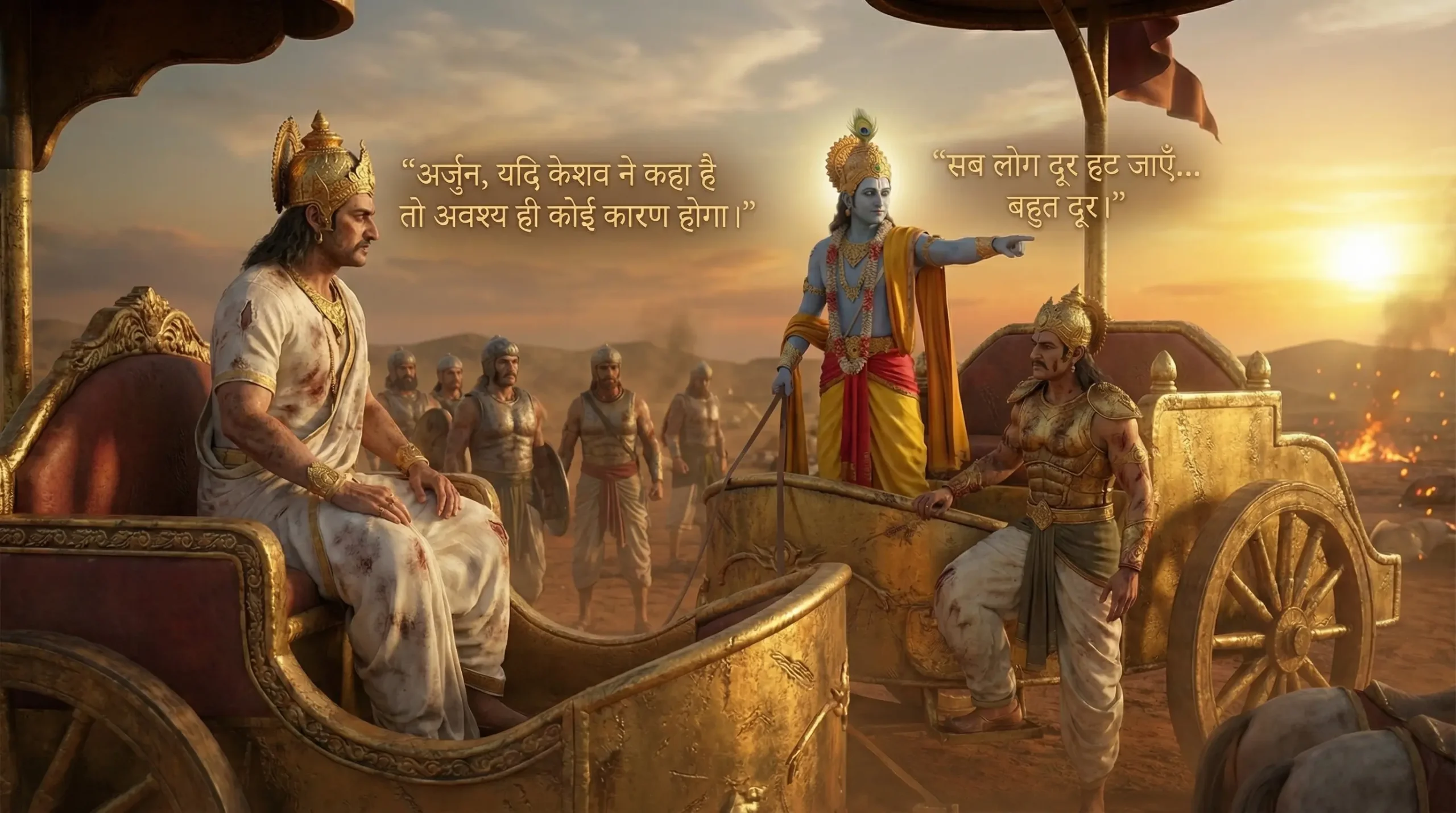
Just then, another chariot approached. It was Yudhishthira, the eldest Pandava, his face serene yet weary from the trials of war. He called out to his brother, his voice carrying the wisdom of restraint.
“Arjuna,” Yudhishthira said, “if Krishna asks you to step down, you must obey. Do not question him.”
Arjuna hesitated, his pride wrestling with obedience. But Yudhishthira’s words carried weight. Reluctantly, he climbed down from the chariot, his feet touching the dust of Kurukshetra once more. Still, confusion clouded his mind. What was Krishna doing?
Krishna’s Command
Krishna then raised his voice, commanding all nearby warriors and attendants.
“Move back… all of you. Far away from the chariot.”
The tone of his voice left no room for questions. The soldiers obeyed, stepping back, murmuring among themselves. Arjuna watched intently, his curiosity mounting. Krishna’s actions were deliberate, purposeful, yet shrouded in mystery.
Finally, when everyone was at a safe distance, Krishna himself descended from the chariot.
And in that very instant—
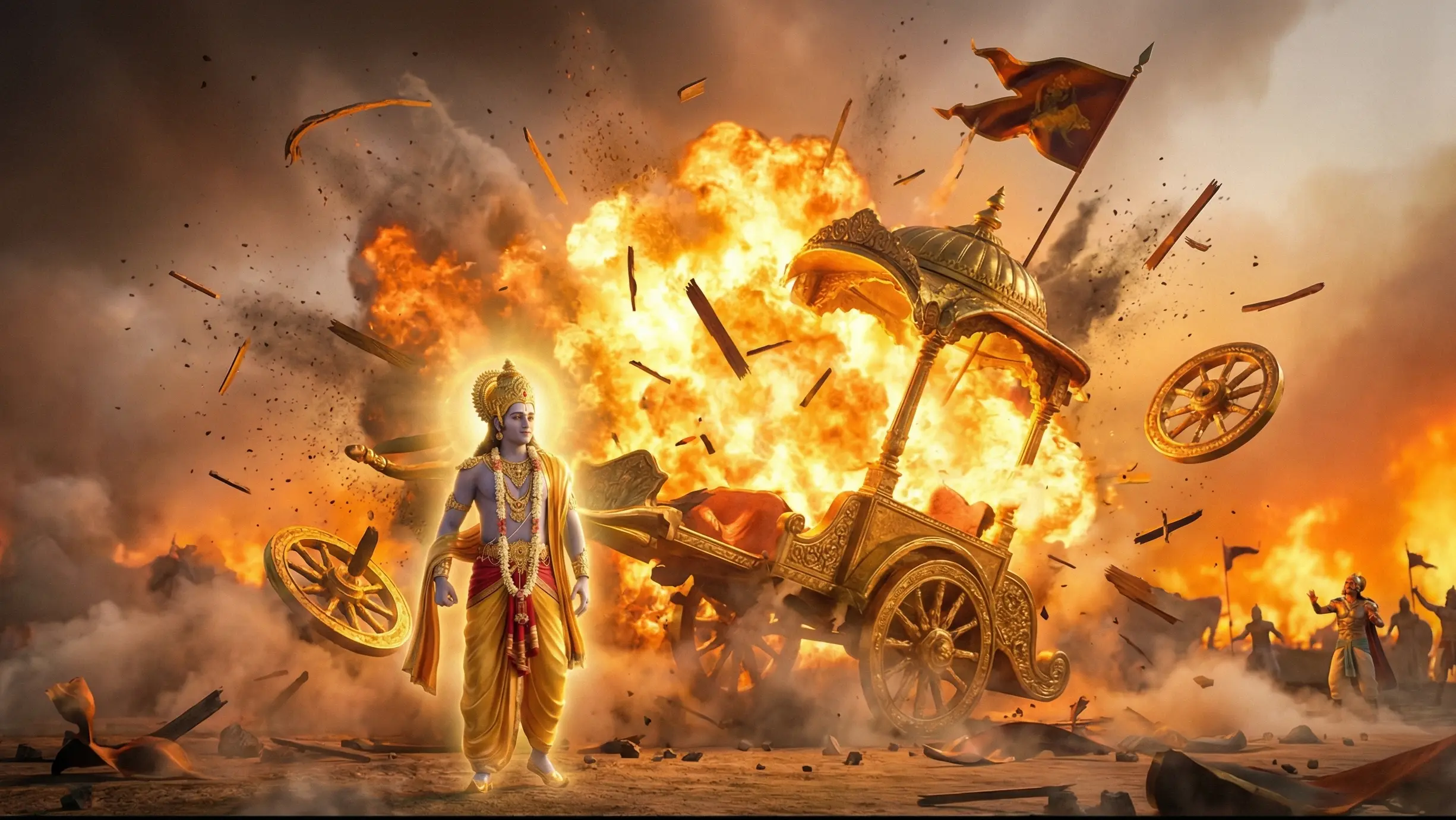
BOOM!
The Chariot in Flames
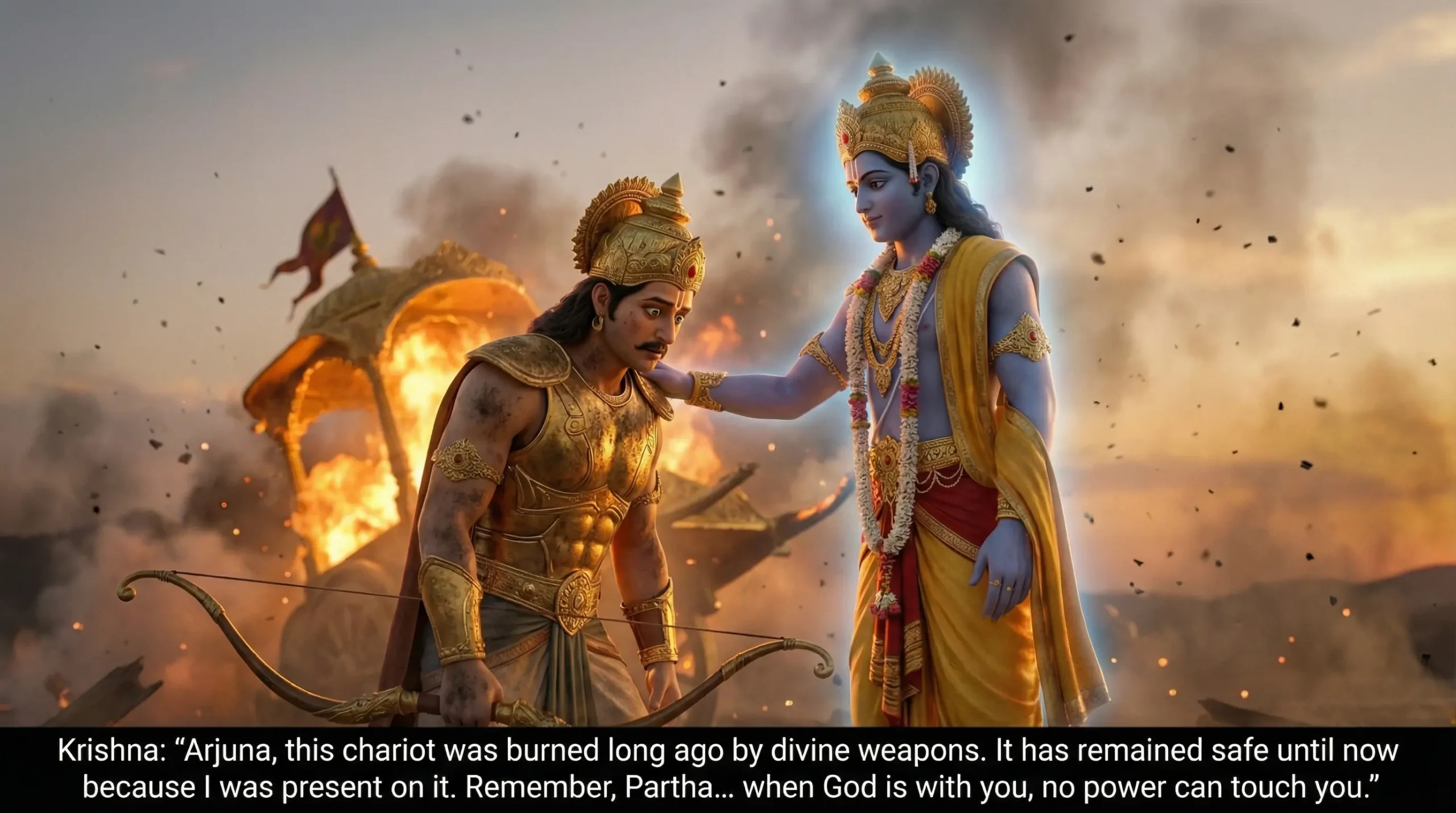
The chariot erupted into a blazing inferno. Flames shot upward, wheels shattered into fragments, the flagpole snapped like a twig, and the once-magnificent vehicle was reduced to smoldering ruins. The explosion was so fierce that the ground trembled, as if struck by thunder from the heavens. What had moments ago carried them through battle was now nothing more than ashes.
Arjuna stood frozen, his eyes wide with shock. His voice trembled as he spoke.
“What… what happened?”
Krishna turned to him, his expression serene, his smile gentle yet filled with infinite wisdom.
Krishna’s Revelation
“Arjuna,” he said softly, “this chariot was struck by countless celestial weapons during the war—arrows empowered with divine energy, missiles that carried the fire of gods. Each blow should have destroyed it long ago. But it was my presence alone that held their destructive force at bay. As long as I sat upon it, the weapons could not unleash their fury. Now that the war is over, and I stepped down, the protection vanished… and the chariot met the fate it was destined for.”
Arjuna’s pride melted away in that moment. His heart, once swollen with victory, now sank with humility. A deep realization washed over him like a cleansing tide.
Divine Protection and Humility
Victory was not his alone. Skill was not his alone. Even survival was not his alone.
It was Krishna—his guide, his protector, his divine charioteer—who had shielded him every moment. Without Krishna, the war would have consumed him. Without Krishna, his arrows would have been meaningless. Without Krishna, even his triumph would have turned to ashes.
Krishna’s smile deepened, his words carrying the eternal truth.
“Remember, Arjuna… when the Divine stands with you, no force in the world can harm you.”
Arjuna bowed his head, humbled—not by defeat, but by the grace that had carried him through victory.
Expanding the Atmosphere
The battlefield of Kurukshetra was more than a place of war—it was a stage where human pride, divine will, and cosmic truths collided. The dust that lingered was not just the residue of battle, but the weight of lessons learned. The silence that followed was not emptiness, but the echo of realization.
Arjuna’s journey was emblematic of every human being’s struggle. Pride in one’s achievements, the illusion of control, the belief that victory is self-earned—all these dissolve when confronted with the truth of divine grace. The chariot’s explosion was a reminder that even the strongest structures crumble without the presence of the Divine.
The Eternal Message
The story of Arjuna and Krishna’s chariot is retold across generations, not merely as a tale of war, but as a parable of faith. It teaches that human effort, though necessary, is incomplete without divine support. It reminds us that victories are not ours alone, but gifts of grace. It humbles the proud, uplifts the weary, and instills faith in the hearts of seekers.
Arjuna’s bowed head symbolizes surrender—not to defeat, but to wisdom. His humility became his greatest victory, greater even than the triumph over the Kauravas. For in that moment, he understood the eternal truth: when the Divine stands with you, no force in the world can harm you.
Frequently Asked Questions
1. What lesson did Arjuna learn after the chariot exploded?
Arjuna realized that victory was not his alone, but guided by Krishna’s divine protection. His pride dissolved into humility and gratitude.
2. Why did Krishna ask Arjuna to step down first?
Krishna knew the chariot was struck by celestial weapons. His presence shielded it, and once he stepped down, the protection vanished.
3. What does the chariot’s destruction symbolize?
It symbolizes the fragility of human pride and the necessity of divine grace. Even the strongest structures crumble without the Divine.
4. How did the warriors react to the chariot’s destruction?
The warriors were awestruck, speaking in hushed tones about Krishna’s power. They realized the war was a cosmic play orchestrated by the Divine.
5. What eternal truth did Krishna share with Arjuna?
Krishna reminded Arjuna that when the Divine stands with you, no force in the world can harm you.
About the Author